Menopause is when a woman permanently stops having periods as she reaches the end of her natural reproductive life. The average age of menopause in the UK is 51, and usually happens between 45 and 55 years old.
Post-menopause refers to a woman’s life after the menopause, twelve months after her last period.
Peri-menopause is the time when women experience menopausal symptoms even before their periods stop. Menstrual cycle changes, becoming more or less frequent, bleeding is heavier or lighter. Symptoms can last on average 5-10 years and then decrease in intensity.
Early menopause occurs when a woman stops having periods before she is 45, and premature menopause when the periods stop before 40 years.
Menopause symptoms can be brought on because of a cancer diagnosis. This can happen for different reasons:
Chemotherapy can interfere with ovarian function and result in menopausal symptoms. In some women, ovarian function can return after chemotherapy is completed but this is less likely in women who are approaching the menopause.
Surgically removing the ovaries in a pre-menopausal woman leads to a sudden fall in hormone levels and rapid onset of menopause symptoms.
Having to stop HRT
If you have been prescribed Hormonal therapy (e.g. Tamoxifen or Aromatase inhibitors such as Anastrozole).
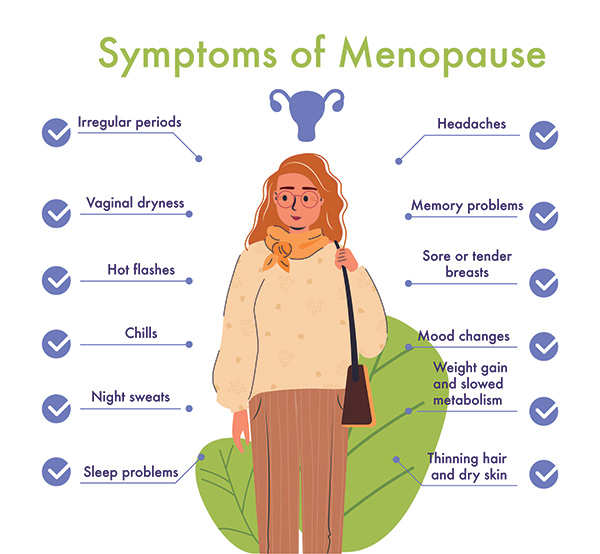
Symptoms of the Menopause
In general, 8 out of 10 women experience some symptoms relating to the menopause, typically lasting about 4 years after the last period, but these symptoms can continue for up to 12 years in about 10% of women.
For women who have had cancer these symptoms can overlap with symptoms related to their cancer diagnosis and treatment. For example, chemotherapy can increase problems with memory or concentration (often referred to as chemo brain), affect sleep and mood, reduce sex drive, and cause muscle aches/joint pains.
Symptoms of the menopause are a result of reduced levels of oestrogen in the body. Oestrogen is the main female sex hormone, necessary for maintaining sexual and reproductive health. Prolonged lack of oestrogen can also affect the bones and cardiovascular system.
HRT facts
Hormone Replacement Therapy (HRT) tops up the natural hormones that your body produces less of during the menopause. This resource explains who HRT may be suitable for, the different types available, and the potential benefits and risks of taking HRT.
The question often asked is – is it safe for me to take Hormone Replacement Therapy (HRT) if I have had cancer? The answer is not straight forward find out more by downloading our resource.
If you have been told by a doctor that you cannot have HRT due to increased cancer risks, then this section will be helpful in managing some of the symptoms of the menopause.
Menopause is a natural transition, but it can bring physical, emotional and metabolic changes. Shifts in hormone levels influence heart health, bone strength, muscle mass, digestion, mood, sleep and how the body stores fat. The good news? Lifestyle choices make a real difference.